
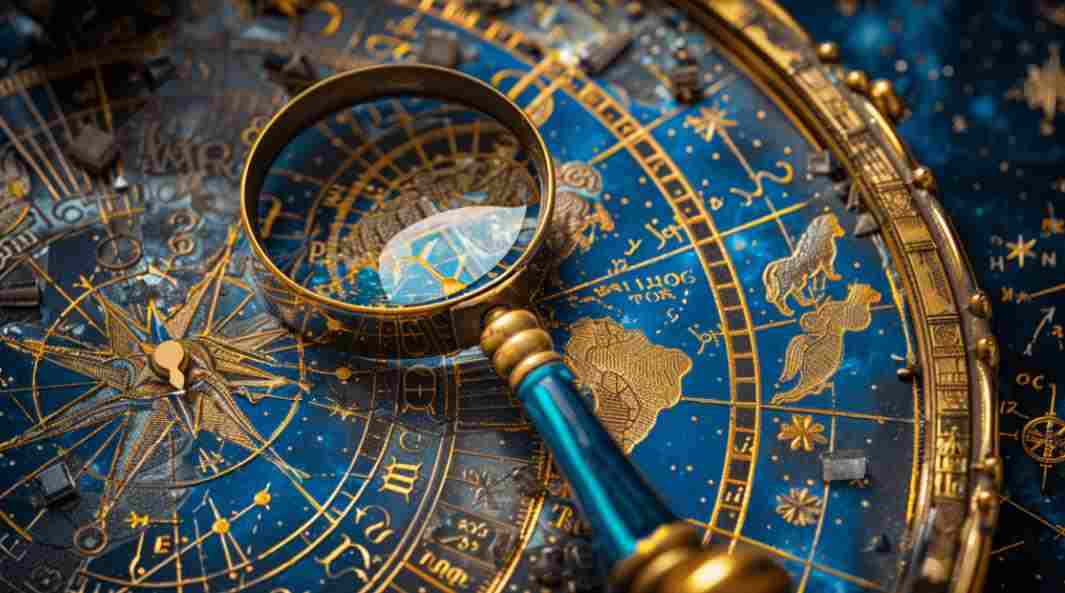
Astrology has captured the human imagination for thousands of years. From ancient civilizations seeking guidance from the stars to modern individuals trying to make sense of their personalities and life patterns, the study of celestial movements continues to shape the way we understand ourselves. One of the most essential tools in astrology is the birth chart—a detailed map of the sky at the exact moment you were born.
Whether you’ve never looked at your chart before or you’ve peeked at your Sun sign and felt totally lost when seeing things like “Venus in the 7th house,” this guide will walk you through everything you need to know. By the end, you’ll understand what a birth chart is, how it works, and why so many people consider it a powerful tool for self-reflection.
1. What Is a Birth Chart?
A birth chart (also known as a natal chart) is a circular diagram that shows the positions of the Sun, Moon, and planets at the exact date, time, and location of your birth. In astrology, these positions are believed to influence your personality, emotional needs, desires, strengths, challenges, and even the types of experiences you encounter throughout life.
Think of the birth chart as a cosmic blueprint. Just as a fingerprint is unique to each person, your chart is one of a kind. Even someone born on the same day and in the same city could have a different chart if they were born minutes apart. That is part of what makes birth charts so personal and detailed.
A typical chart includes:
- Twelve zodiac signs
- Ten main planets and luminaries (Sun, Moon, Mercury, Venus, Mars, Jupiter, Saturn, Uranus, Neptune, Pluto)
- Twelve astrological houses
- Aspects, or angles that planets form with one another
Understanding each of these pieces will help you see how your chart expresses your unique personality and life themes.
2. The Importance of Your Birth Time
One of the most common questions beginners ask is: Why do I need my exact birth time?
Your birth time is crucial because the Ascendant (rising sign) and the house placements shift approximately every two hours. A difference of even 10–15 minutes can change the rising sign entirely or move planets into different houses, significantly altering the interpretation.
If you don’t know your birth time:
- You can check your birth certificate.
- Ask family members if they remember.
- Contact your hospital, if possible.
- Use a “solar chart,” which places the Sun at the Ascendant—but this method is less precise.
The more accurate your birth time, the more accurate your chart interpretation will be.
3. The Zodiac Signs in Your Chart
Most people know their Sun sign, which is the sign newspapers and websites refer to in daily horoscopes. But your Sun sign is only one piece of a much larger puzzle. In your birth chart, every planet falls into a specific zodiac sign, giving that planet a particular expression.
What the 12 zodiac signs represent
Each sign represents a specific element, modality, and set of traits:
- Fire signs (Aries, Leo, Sagittarius): Energetic, passionate, bold
- Earth signs (Taurus, Virgo, Capricorn): Practical, grounded, stable
- Air signs (Gemini, Libra, Aquarius): Mental, social, communicative
- Water signs (Cancer, Scorpio, Pisces): Emotional, intuitive, sensitive
Why this matters
If your Mars is in Aries, you may assert yourself boldly.
If your Mars is in Pisces, you may approach conflict with empathy or avoid it altogether.
The sign colors how the planet’s energy expresses itself.
4. The Planets and What They Mean
To understand a birth chart, you need to know what each planet symbolizes. In astrology:
- The Sun represents your core identity and life purpose.
- The Moon reflects your emotions, instincts, and inner needs.
- Mercury rules communication and thinking.
- Venus deals with love, relationships, and values.
- Mars governs action, drive, and aggression.
- Jupiter symbolizes growth, abundance, and luck.
- Saturn represents discipline, responsibility, and lessons.
- Uranus is innovation, rebellion, and sudden change.
- Neptune concerns spirituality, dreams, and illusions.
- Pluto governs transformation and power.
Each planet represents a different part of your psyche. The sign it falls in describes how that psyche functions. The house shows where in life its influence is felt.
5. Astrological Houses: The Twelve Sections of Life
The birth chart is divided into 12 houses, each representing a different area of life. If planets are the actors, and zodiac signs are the costumes, then houses are the stage.
Here’s what the houses represent:
- First House (Self): Identity, appearance, first impressions
- Second House (Value): Money, possessions, self-worth
- Third House (Communication): Learning, siblings, local environment
- Fourth House (Home): Family, roots, emotional foundation
- Fifth House (Creativity): Romance, enjoyment, talents, children
- Sixth House (Work): Daily routines, health, service
- Seventh House (Partnerships): Marriage, relationships, one-to-one dynamics
- Eighth House (Transformation): Intimacy, shared resources, rebirth
- Ninth House (Expansion): Philosophy, travel, higher learning
- Tenth House (Career): Reputation, public life, achievements
- Eleventh House (Community): Friends, social networks, aspirations
- Twelfth House (Soul): The unconscious, healing, spiritual lessons
For example:
- Venus in the 10th house may suggest public charm or a career connected to beauty or art.
- Mars in the 4th house may indicate tension within childhood or a strong protective instinct at home.
6. The Ascendant and the Big Three
Many beginners hear people mention the Big Three:
- Sun sign — who you are at your core
- Moon sign — how you feel and respond emotionally
- Rising sign (Ascendant) — how you present yourself to the world
Your Ascendant
The Ascendant is the sign that was rising on the eastern horizon at the moment of your birth. It influences:
- Your appearance
- Your behavior
- How others initially perceive you
- Your approach to new experiences
Some astrologers say your rising sign is your “default mode,” especially when meeting new people.
7. Aspects: How Planets Talk to One Another
An aspect is the angle between two planets in the chart. Aspects show how different parts of your personality interact.
The major aspects include:
- Conjunction (0°): Merged energies
- Sextile (60°): Opportunities, ease
- Square (90°): Tension, challenges
- Trine (120°): Harmony, natural talent
- Opposition (180°): Polarity, balance needed
Aspects can show conflicting drives, innate talents, or areas of growth. For example:
- A Moon–Saturn square may indicate emotional restraint or difficulty expressing vulnerability.
- A Sun–Jupiter trine may reflect optimism, confidence, and generosity.
Aspects give the chart emotional depth and describe how your inner world operates.
8. How to Read a Birth Chart Step by Step
Birth charts can look overwhelming at first glance, but you can break them down into manageable steps.
Step 1: Start with the Big Three (Sun, Moon, Ascendant)
These give you an overview of your core personality.
Step 2: Look at personal planets
These influence everyday emotions, actions, and relationships:
- Mercury
- Venus
- Mars
Step 3: Examine the outer planets
They show generational influences and deeper psychological themes:
- Saturn
- Uranus
- Neptune
- Pluto
Step 4: Identify house placements
Ask yourself:
- Which areas of life are emphasized?
- Which houses contain multiple planets (stelliums)?
Step 5: Study aspects
Look for:
- Challenges (squares, oppositions)
- Strengths (trines, sextiles)
- Key conjunctions
Step 6: Put the pieces together
Interpretation requires blending:
- Planet + Sign + House + Aspects
Example:
“Mars in Gemini in the 11th house square Neptune”
= A socially active person whose drive for connection may clash with confusion about group identity or idealism.
Reading charts is both analytical and intuitive. Practice is essential.
9. Why Birth Charts Matter
Astrology doesn’t claim to predict every detail of your life. Instead, it offers a symbolic language to explore your:
Personality Patterns
You may discover:
- Why you react emotionally in certain ways
- Why certain relationships repeat
- What motivates or frustrates you
Inner Conflicts
Charts can explain tensions between:
- Heart and mind
- Desire and fear
- Logic and intuition
Life Themes
Some people have:
- Strong 10th house themes → Career focused
- Heavy 4th house emphasis → Home and family oriented
- Dominant water → Emotionally sensitive
- Dominant air → Intellectual and curious
Growth Opportunities
Astrology highlights areas of potential challenge and self-development.
10. Misconceptions About Birth Charts
1. “Astrology controls your fate.”
Astrology shows tendencies, not fixed outcomes.
2. “Only your Sun sign matters.”
Your chart contains dozens of layers—the Sun is only one of them.
3. “Astrology is fortune-telling.”
Modern astrology is more psychological than predictive.
4. “Charts of people born on the same day are identical.”
Time and location change everything.
11. How to Use a Birth Chart for Self-Discovery
Here are practical ways to use your chart:
Journaling
Reflect on:
- Moon sign needs
- Venus relationship patterns
- Saturn challenges
Career Guidance
Your Midheaven (10th house cusp) reveals your public path.
Relationship Insight
Your 7th house and Venus placement provide clues about partnership needs.
Emotional Healing
The Moon, 4th house, and aspects to Pluto can reveal deep wounds and resolutions.
Life Direction
Nodes (North Node and South Node) highlight karmic lessons and future paths.
12. Example Birth Chart Interpretation (Simplified)
Here’s a brief example of how a chart interpretation might look:
Sun in Leo (10th house):
You shine in your career and thrive when recognized for leadership and creativity.
Moon in Taurus (7th house):
You need stability and emotional security in relationships.
Rising in Scorpio:
You project intensity and depth, often keeping your true motives hidden.
Venus in Cancer (9th house):
You value emotional closeness, nurturing connections, and long-distance or intercultural relationships.
Mars square Saturn:
You struggle between the urge to act and the fear of making mistakes—but persistence leads to long-term success.
This demonstrates how different elements combine into a cohesive psychological portrait.
13. Tips for Beginners Studying Astrology
- Start slow—don’t try to understand everything at once.
- Focus first on planets through signs.
- Then move to house placements.
- Finally study aspects.
- Use reputable sources or books.
- Practice by examining charts of friends and family.
- Be patient—astrology is a lifelong study.
14. Why Birth Charts Are Still Relevant Today
In an age dominated by science and technology, why do millions still turn to astrology?
Because people crave:
- Self-understanding
- Meaning and purpose
- Language for emotions
- Connection to something bigger
A birth chart is not a scientific tool, but a symbolic mirror. For many, it offers insight, comfort, and clarity.
A birth chart is far more than a simple horoscope. It is a detailed map of your inner world, personality patterns, potential challenges, strengths, and life themes. By studying the placement of planets in signs, their positions in houses, and the aspects they form, you gain a deeper understanding of yourself and your life’s journey.
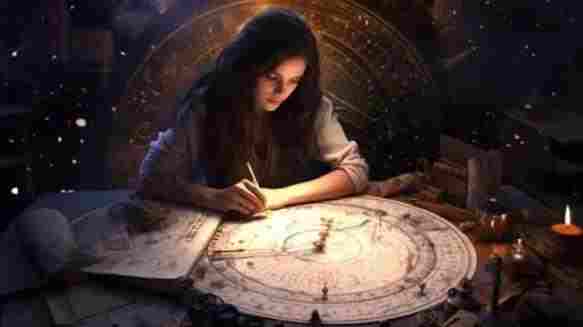
Whether you use astrology for self-reflection, curiosity, personal growth, or spiritual guidance, your birth chart can be a powerful resource. And while the system is complex, anyone can begin learning. With time and practice, the symbols become familiar, and the chart transforms from a mysterious wheel into a meaningful portrait of who you are.
This guide has given you the foundational knowledge you need to begin exploring your own chart with confidence. Remember—your chart does not define you, but it can illuminate your path. And that alone makes astrology a fascinating and valuable tool for beginners and experienced practitioners alike.

Leave a Reply