
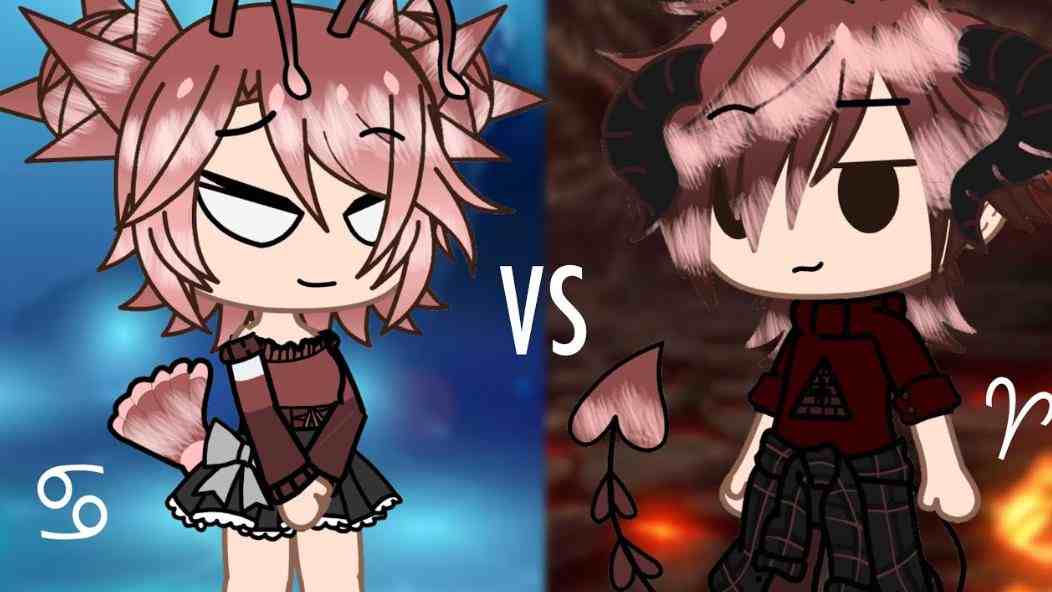
When fire meets water, something powerful happens—something volatile, something tender, something that feels like the universe daring two opposites to see whether they can love each other without destroying each other first. In astrology, fire and water are considered incompatible elements, destined to challenge more than comfort, to ignite more than soothe. Yet psychologically, these pairings are among the most transformative relationships people experience.
There is something mythic about a fire sign falling for a water sign: the flame racing toward the wave, the wave rising to meet the flame. Most people assume the story ends with one extinguishing the other. But the truth is far more complex, far more emotional, and, strangely, far more hopeful.
Fire signs—Aries, Leo, and Sagittarius—carry within them the pulse of life, urgency, instinct, and charisma. Water signs—Cancer, Scorpio, and Pisces—carry depth, intuition, emotion, and psychological gravity. They are built from different languages, different nervous systems, different internal climates. Yet when they collide, a new landscape forms, something neither could create alone.
And that is why they clash.
And that is why they stay.
This is the story of their elemental dance.
The Pulse of Fire and the Tide of Water
Fire signs move through the world like sparks searching for meaning through action. They decide quickly, love boldly, speak directly, and live with a kind of internal drumbeat that pushes them into the future. The flame doesn’t want to sit still; it needs oxygen, motion, and space. To fire signs, expressing emotion means expressing immediately—without rehearsal, without hesitation.
Water signs, by contrast, move through the world like emotional empaths absorbing everything. They feel first, interpret second, and act only after they’ve allowed their intuition to form a complete picture. Where fire charges, water observes. Where fire speaks, water senses. Where fire leaps, water drifts inward. Emotion for water signs is not episodic—it is atmospheric.
Put these two together, and they immediately recognize their opposite. Fire sees water as mysterious, soulful, complex, and magnetic. Water sees fire as alive, fearless, luminous, and liberating. Neither understands the other fully, but both are intrigued by the very qualities they lack.
This is how the story begins.
Where Passion Meets Vulnerability
Fire signs often fall for water signs because they sense something in them that isn’t available in their own world. There is a depth in water signs that invites fire to pause for once in their life. Water signs carry a kind of emotional authenticity that fire finds rare, precious, even sacred. Fire is drawn to water’s softness, its sensitivity, its ability to feel what others cannot put into words. For a fire sign, being with a water sign can feel like being allowed inside a hidden room where intimacy is not just shared—it is shaped.
Water signs, on the other hand, fall for fire because fire brings a sense of movement into their emotional oceans. Fire warms the cold currents of water’s fears. Fire brightens water’s dark moods. Fire acts when water overthinks. Fire speaks when water hesitates. Fire signs carry the courage that water signs quietly crave but rarely claim. To be near fire is to be reminded that life can be thrilling, impulsive, full of possibility.
There is something intoxicating about this exchange:
Fire opens water.
Water deepens fire.
But while the chemistry is undeniable, the differences that generated the attraction are also the ones that create friction.
When Languages Collide
Fire and water speak different emotional dialects.
When a fire sign is upset, they tend to say exactly what’s on their mind—sometimes unfiltered, sometimes too sharp, but always honest. They don’t like emotional puzzles; they want the truth laid out clearly and immediately. To them, transparency is love.
Water signs, however, communicate emotion through mood, tone, implication, energy. They are not vague—they are layered. They process feelings inwardly, often privately. They do not reveal everything at once, not because they are hiding, but because revealing takes trust, safety, and time. To them, sensitivity is love.
This leads to the most common fire–water misunderstanding:
Fire thinks water is withholding.
Water thinks fire is insensitive.
Fire says: “If something’s wrong, tell me.”
Water thinks: “If you understood me, you wouldn’t have to ask.”
Neither is wrong. Both are misunderstood.
Psychologically, this dynamic mirrors explicit communication (fire) versus implicit communication (water). One needs clarity; the other needs attunement. Miscommunication becomes a slow erosion, not because the feelings fade, but because the emotional languages never fully align unless both partners learn to translate.
The Tempo of Love
One of the most defining differences between fire and water is pace. Fire signs move quickly—through jobs, decisions, emotions, even conflicts. They like momentum. They feel powerful when things are moving forward.
Water signs move slowly. They process deeply. They feel everything. They need time—time to reflect, time to grieve, time to interpret meaning.
This mismatch of tempo can create tension:
Fire wonders why water is taking so long to forgive, to decide, to open up.
Water wonders why fire is always in a hurry, always jumping, always burning.
In fire’s world, lingering means stagnation.
In water’s world, rushing means recklessness.
They do not simply move at different speeds—they move in different dimensions. One is directional; the other is emotional. And when these rhythms collide, each may interpret the other as uncaring, uncommitted, or overwhelming.
The truth is simpler: their timing is different, not their devotion.
Conflict, the Firestorm and the Undertow
Conflict between fire and water is not gentle. It is not neutral. It is not balanced. It is a clash of instinct.
Fire rises.
Water recedes.
Fire confronts.
Water withdraws.
Fire signs rarely want to wait until they’ve cooled down. Their instinct is to talk now, fix now, resolve now. Their anger is direct, immediate, self-expressive. They feel temporary flares of emotion that dissipate after they speak.
Water signs recoil from this intensity. When overwhelmed, they retreat into silence or emotional distance. They need containment, space, quiet. Their anger is slow-burning, internal, and long-lasting. They don’t flare—they seep, absorb, and hold.
To fire, water’s silence feels punishing.
To water, fire’s intensity feels threatening.
Both feel misunderstood.
Both feel unsafe.
Both end up amplifying the other’s worst instincts.
Psychologically, this is the classic pursuer–withdrawer dynamic described in attachment theory. The fire sign pursues to restore connection; the water sign withdraws to restore safety. Neither is trying to hurt the other—they’re trying to survive the moment. But survival instincts rarely look like love, even when they come from love.
Why They Stay, Even When They Break
If fire and water relationships are so difficult, why do they last? Why do they return to each other even after they burn or drown one another?
There are several reasons, and each is emotionally profound.
First, fire and water bring out each other’s growth edges. Water teaches fire to reflect, to consider the emotional impact of their actions, to appreciate intimacy. Fire teaches water to speak up, to take risks, to trust their own strength, to step into the world with more confidence. These relationships rarely leave people unchanged—they evolve them.
Second, fire and water create a psychological magnetism rooted in desire for completion. Fire feels something alive in water that they cannot access alone. Water feels something empowering in fire that they cannot manifest alone. They are not trying to become the same—they are trying to become whole.
Third, the emotional chemistry between fire and water is often unparalleled. Fire provides passion. Water provides depth. Together, they create a love that is all-consuming, transformative, unforgettable. Even when the relationship ends, its imprint remains, often shaping future relationships in ways other pairings never did.
Lastly, despite their differences, both fire and water share an intensity of loyalty. Fire is loyal to the person who inspires them, who moves them, who stirs their spirit. Water is loyal to the person they emotionally bond with, who makes them feel seen, who honors their vulnerability. When these two commit, they commit deeply.
And that deep commitment becomes a kind of anchor—a reason to stay, to try again, to rebuild.
Learning to Love Across Elements
Fire and water relationships can thrive beautifully when both partners learn to honor the other’s nature.
Fire must learn to slow down—not to extinguish the flame, but to allow the water time to reveal its depth. Fire must learn that emotions are not obstacles; they are information. Listening is not losing power; it is giving love shape.
Water must learn to speak directly—not to abandon their intuition, but to trust that clarity protects them. Water must learn that independence is not abandonment; it is breathing room. Boundaries are not threats; they are anchors.
Together, they must learn rhythm. Fire must learn ebb and flow. Water must learn rise and fall. Harmony is not found in sameness—it is found in attunement.
When fire warms water gently rather than boiling it, water becomes healing.
When water cools fire without smothering it, fire becomes illuminating.
This is the beauty of their potential.

The Myth They Share
The story of fire and water is older than astrology. It is the myth of the warrior meeting the healer. The flame meeting the ocean. The spirit meeting the soul. In literature, film, and folklore, these archetypes appear again and again because they represent a universal truth: humans are drawn to what challenges them. We fall in love with our opposite not because it is comfortable, but because it is transformative.
Fire signs teach us to live.
Water signs teach us to feel.
Together, they teach each other to love in ways neither could alone.
Their story is not simple.
It is not peaceful.
It is not predictable.
But it is powerful, honest, and real.
And that is why—despite the storms, despite the misunderstandings, despite the elemental friction—
fire and water keep finding each other, again and again.


Leave a Reply